

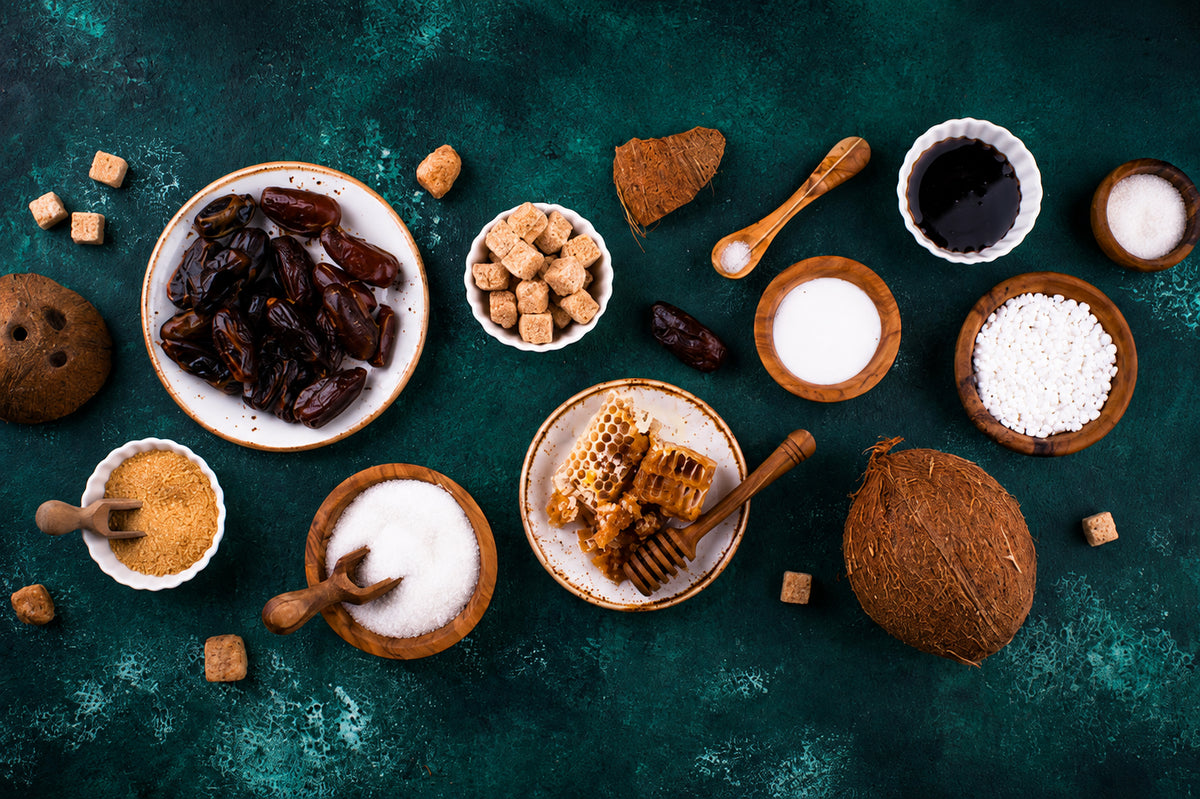
Date sugar, cane sugar, coconut sugar, honey, maple syrup, agave, stevia - here's what the science actually says about each one.
Hi Mejdoolers,
This natural sweetener comparison covers seven of the most popular options on the market today - date sugar, cane sugar, coconut sugar, honey, maple syrup, agave, and stevia. Each one comes with its own marketing story, and not all of them hold up to scrutiny. We broke it down honestly, with no overclaiming. Here's what you actually need to know.
Cane sugar is the benchmark everything else gets compared to. Derived from sugarcane, heavily refined, and stripped of virtually all nutritional value in the process. What you're left with is pure sucrose - fast-digesting, high-glycemic, and nutritionally empty. Excess cane sugar consumption is well-linked to weight gain, inflammation, and metabolic dysfunction. It dissolves easily in liquids, works predictably in baking, and remains the gold standard for taste and texture in commercial food production. But from a nutritional standpoint, it brings nothing to the table except calories.
Coconut sugar is made from the sap of coconut palm flowers and is often marketed as a low-GI, nutrient-rich alternative to cane sugar. The reality is more nuanced. The widely cited GI of 35 traces back to a single Philippine study that hasn't been independently replicated - most peer-reviewed measurements put it closer to 54. It does contain small amounts of inulin, potassium, and iron, but Cleveland Clinic dietitians caution that those quantities are too small at typical serving sizes to make a meaningful difference. Marginally better than cane sugar, but not by as much as the marketing suggests.
Honey has a legitimate case as one of the better natural sweeteners. Raw honey contains enzymes, antioxidants, and prebiotic oligosaccharides that refined sugar simply doesn't have. Its GI sits around 55 - lower than cane sugar - and research published in Nutrients suggests honey may help reduce LDL cholesterol, improve insulin sensitivity, and reduce oxidative stress compared to regular sugar. That said, honey is still a concentrated sugar source, and the benefits are most pronounced with raw, unpasteurized varieties - not the processed stuff in plastic bears. If you're using honey, quality matters.
Pure maple syrup is one of the more genuinely nutritious liquid sweeteners available. It contains meaningful amounts of manganese (up to 35% of your daily value per tablespoon), zinc, and over 60 identified polyphenol antioxidants. Its GI of around 54 is notably lower than cane sugar, and the minimal processing preserves those bioactive compounds. The catch? It's still about 67% sucrose by weight, so portion control matters - the GI advantage disappears quickly if you're drowning your pancakes in it. Also worth noting: many "maple syrups" on shelves are actually corn syrup with flavouring. Always check you're buying 100% pure.
Agave is one of the most misleading sweeteners on the market. Its GI is genuinely low - around 15-19 - which sounds impressive until you understand why. Agave is approximately 85% fructose, which bypasses blood glucose entirely and goes straight to the liver. That's the reason for the low GI - not because it's gentle on your body, but because it's processed differently. Overloading the liver with fructose is linked to fat buildup, higher triglycerides, and insulin resistance over time. Dr. Andrew Weil - who previously recommended agave - has since reversed his position, noting it contains more fructose than high-fructose corn syrup. Use it sparingly if at all.
Stevia is a plant-derived, zero-calorie sweetener with no blood sugar impact, making it popular for people managing diabetes or following low-carb diets. The FDA, EFSA, and WHO have reviewed long-term studies and found no evidence of toxicity from high-purity stevia extracts. That said, research on its effects on gut health has produced mixed results, and some concerns around hormone disruption are still being investigated. The bigger practical issue is that most commercial stevia products are blended with additives like erythritol or maltodextrin, which can cause digestive discomfort. The sweetener you're buying matters as much as the stevia itself. It also has a noticeable aftertaste that divides people.
Date sugar is made from one ingredient: whole dried dates, ground into a powder. Nothing extracted, nothing refined, nothing added. That distinction matters - because date sugar retains the fibre, antioxidants, vitamins, and minerals found in whole dates, making it one of the only sweeteners on this list that actually brings nutritional value to your food. Its GI sits at around 42-55 - well within the low-to-moderate range - and the fibre content helps slow glucose absorption for a steadier energy release. If you want to understand more about how dates interact with blood sugar, we've covered that in detail. It works as a 1:1 substitute for cane sugar in most baked goods and adds a rich, caramel-like depth of flavour. Not quickly dissolvable in drinks - opt for date molasses as a liquid alternative.
The honest caveat: date sugar is still sugar. It contains roughly the same calories per teaspoon as cane sugar, so portion awareness still matters. But the nutritional context is fundamentally different - you're getting potassium, magnesium, antioxidants, and fibre alongside the sweetness. That's a trade-off worth making.
No sweetener is perfect, and total intake matters more than which sweetener you choose. That said, here's how they stack up honestly:
And if you'd rather skip the sugar conversion altogether, a couple of whole Medjool dates blended into your recipe does the same job with even more nutritional benefit. Check out our guide on dates and weight loss or our breakdown of dates and gut health for more on how whole dates stack up nutritionally. Nature's been doing this longer than any food brand has.
Stay Mighty,
The Mighty Mejdool Team
Share:
Dates for Bone Health: Calcium, Magnesium & Beyond
3-Ingredient Sukkari Gaf Date Fudge